The FIFINE USB/XLR dynamic microphone for podcast recording review centers on a practical dual-connection design: plug in over USB for straightforward use, or connect through XLR to an audio interface or mixer.
Its on-mic mute, headphone monitoring, gain control, and USB-only RGB features make it especially suited to desk-based streaming and casual recording.
FIFINE AM8 Microphone Review Summary
The quick verdict
12,000+ ratings
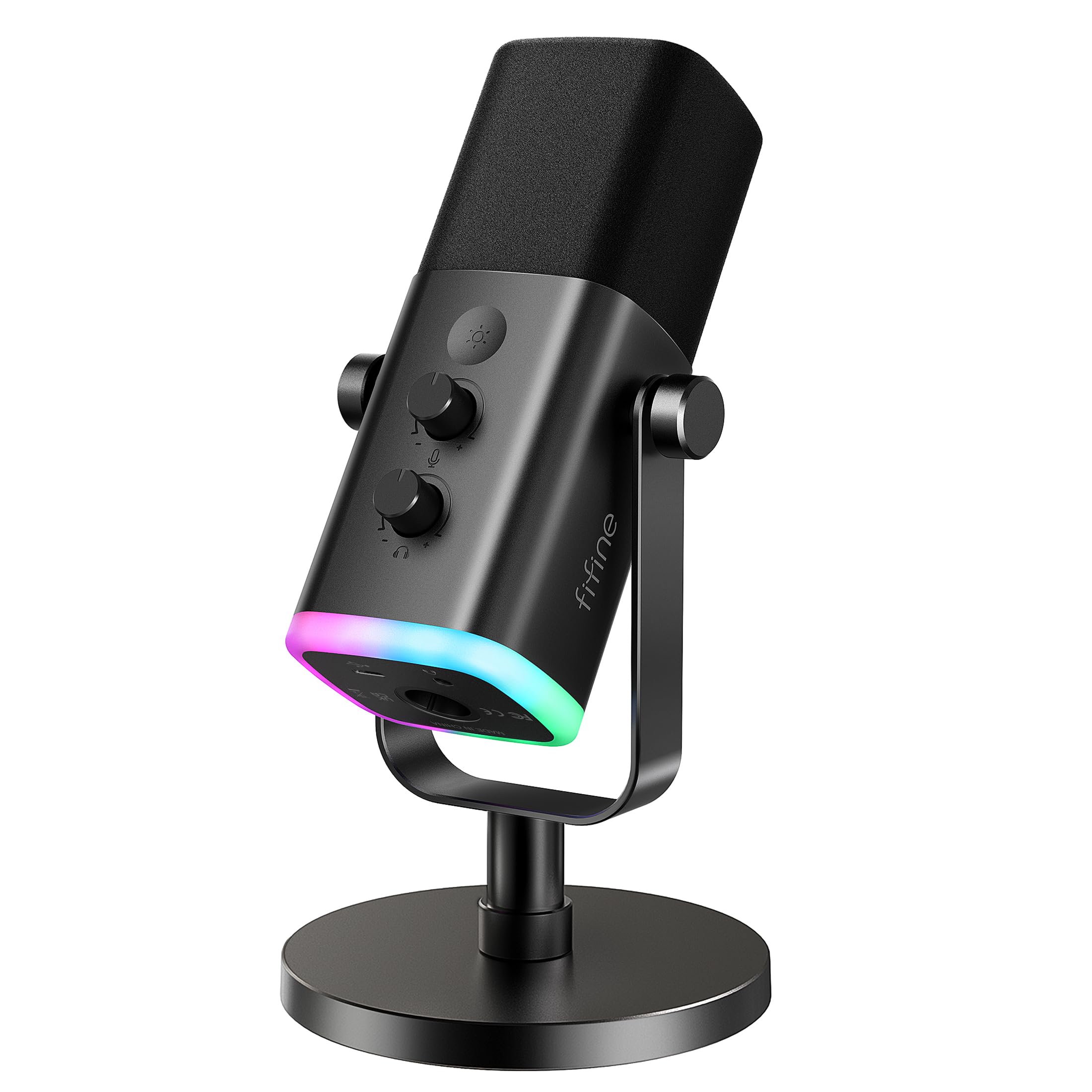
Read Amazon ReviewsFIFINE AmpliGame AM8
A flexible fit for beginner podcasters, streamers, and gamers who want USB convenience now and an XLR connection option for a later setup upgrade.
- Cardioid dynamic microphone with a 50 Hz–16 kHz frequency response; the suggested recording distance is 2 to 6 inches.
- USB connection for direct computer use, with tap-to-mute and an LED mute reminder.
- XLR connection for use with an audio interface or mixer; XLR cable is separate.
- USB-only headphone jack and monitoring-volume control, plus a microphone gain knob.

Pros
- USB and XLR connections accommodate both a simple starting setup and an interface-based recording chain.
- Mute, gain, and headphone monitoring controls are accessible on the microphone in USB mode.
Consider before buying
- The XLR cable is not included, and XLR operation requires an audio interface or mixer.
- RGB lighting and the microphone's function controls are inactive when connected by XLR.
Read the full review summary
The AM8 combines a cardioid dynamic capsule with USB and XLR connections, giving creators a way to start with a direct computer connection and move to interface-based recording later.
USB mode brings the most convenience: tap-to-mute with an LED reminder, headphone monitoring, a gain knob, and adjustable RGB lighting.
The stated frequency response is 50 Hz–16 kHz, and the suggested speaking distance is 2 to 6 inches with the microphone's top facing the sound source.
This is a feature-rich choice for a solo streamer, gamer, or new podcaster who values quick controls and a compact desktop setup.
The main tradeoff is that the microphone's controls and lighting work only over USB; XLR use requires a separate cable and an audio interface or mixer.
Consider how you plan to connect it before buying, particularly if you want those convenience features while recording through XLR.
The buying factors
FIFINE AM8 Microphone Scorecard
Editorial scores reflect listed features and buyer fit; they are not laboratory measurements or customer ratings.
Connection flexibility
USB supports a simple computer setup, while XLR allows connection to a separate interface or mixer as a recording system develops.
USB controls
Tap-to-mute, an LED reminder, headphone monitoring, and a gain knob put several routine adjustments on the microphone.
Recording versatility
The cardioid dynamic design and dual connection options suit desk recording, streaming, and vocal work, with connection-dependent features to account for.
Setup simplicity
USB is described as plug-and-play, so beginners can get started without first adding an interface or mixer.
Visual customization
USB mode offers three RGB modes and more than ten color options, with lighting settings retained after power-off.
Included setup components
The supplied product description lists a desktop stand and threaded mounting points, while an XLR cable is separately required for XLR use.
Key Features and Specifications of FIFINE AM8 Microphone
- Cardioid dynamic microphone with a 50 Hz–16 kHz frequency response; the suggested recording distance is 2 to 6 inches.
- USB connection for direct computer use, with tap-to-mute and an LED mute reminder.
- XLR connection for use with an audio interface or mixer; XLR cable is separate.
- USB-only headphone jack and monitoring-volume control, plus a microphone gain knob.
- USB-only RGB ring with three modes, more than ten colors, and a memory function for lighting selections.
- Desktop stand, windscreen cover, and built-in 3/8-inch and 5/8-inch metal threads for compatible stands.
Pros and Cons of FIFINE AM8 Microphone
Pros
- USB and XLR connections accommodate both a simple starting setup and an interface-based recording chain.
- Mute, gain, and headphone monitoring controls are accessible on the microphone in USB mode.
- The cardioid pattern is designed to focus pickup toward the speaking side and reject off-axis sound.
- RGB options and the included desktop stand suit a visible, desk-centered streaming setup.
Consider before buying
- The XLR cable is not included, and XLR operation requires an audio interface or mixer.
- RGB lighting and the microphone's function controls are inactive when connected by XLR.
- The suggested 2-to-6-inch recording distance calls for close placement, which may take some desk-position adjustment.
Who Should Buy FIFINE AM8 Microphone?
Good fit
Consider the AM8 if you want a single microphone for USB-based gaming, streaming, or podcast work, with an XLR path available for a later setup change.
Its on-device mute and gain controls can make everyday adjustments convenient, while headphone monitoring gives you a way to hear the signal during USB use.
It also makes sense for creators who want a microphone that has a visible role in a gaming or streaming desk setup.
The RGB is configurable over USB, and the included desktop stand provides a starting position; the threaded mounting points can also support compatible microphone stands.
Before choosing it, decide whether USB or XLR will be your normal connection.
USB unlocks the controls and lighting; for XLR, budget for a separate cable and use an interface or mixer, and expect to handle gain and other adjustments through that setup.
Who should skip it
Skip this model if you need its mute, headphone monitoring, gain, and RGB functions to remain available through an XLR connection. Those functions are specified for USB use.
It may not suit a workflow where the microphone must be placed far from the speaker: the suggested recording range is 2 to 6 inches. Check that your desk and preferred speaking position can accommodate close placement.
How the FIFINE AM8 Microphone fits a creator’s setup
USB for a low-friction start
The direct USB connection is the straightforward route for a new creator using a computer.
The on-microphone mute button, reminder light, gain knob, and headphone monitoring can reduce the need to reach for software during a stream or recording session.
These controls and the RGB lighting are USB-specific, so this mode offers the fullest set of described features.
XLR when the recording chain grows
XLR gives the AM8 a place in a setup built around an audio interface or mixer.
That makes the microphone more adaptable as a creator changes how audio is routed, but the change also means obtaining a separate XLR cable and using external equipment.
The USB convenience controls and lights do not carry over to XLR mode, so buyers should treat the two connections as distinct operating setups.
Close, directional positioning
The cardioid pattern is intended to pick up sound from the front while reducing off-axis sound, and the microphone is designed to be addressed at its top.
The suggested 2-to-6-inch distance puts positioning at the center of the setup: keep the top pointed toward the speaker and check that the stand or arm places it comfortably near the mouth.
Desk features and mounting options
A desktop stand and windscreen cover make the AM8 usable as a desk microphone from the outset. Its built-in 3/8-inch and 5/8-inch threads offer additional mounting flexibility with compatible stands.
RGB is a visual feature for USB users rather than a recording benefit, so it should be a secondary consideration behind connection choice and microphone placement.
Alternatives to FIFINE AM8 Microphone
Multipurpose Dynamic Microphones alternative
5,000+ ratings
Read Amazon ReviewsSamson Q2U
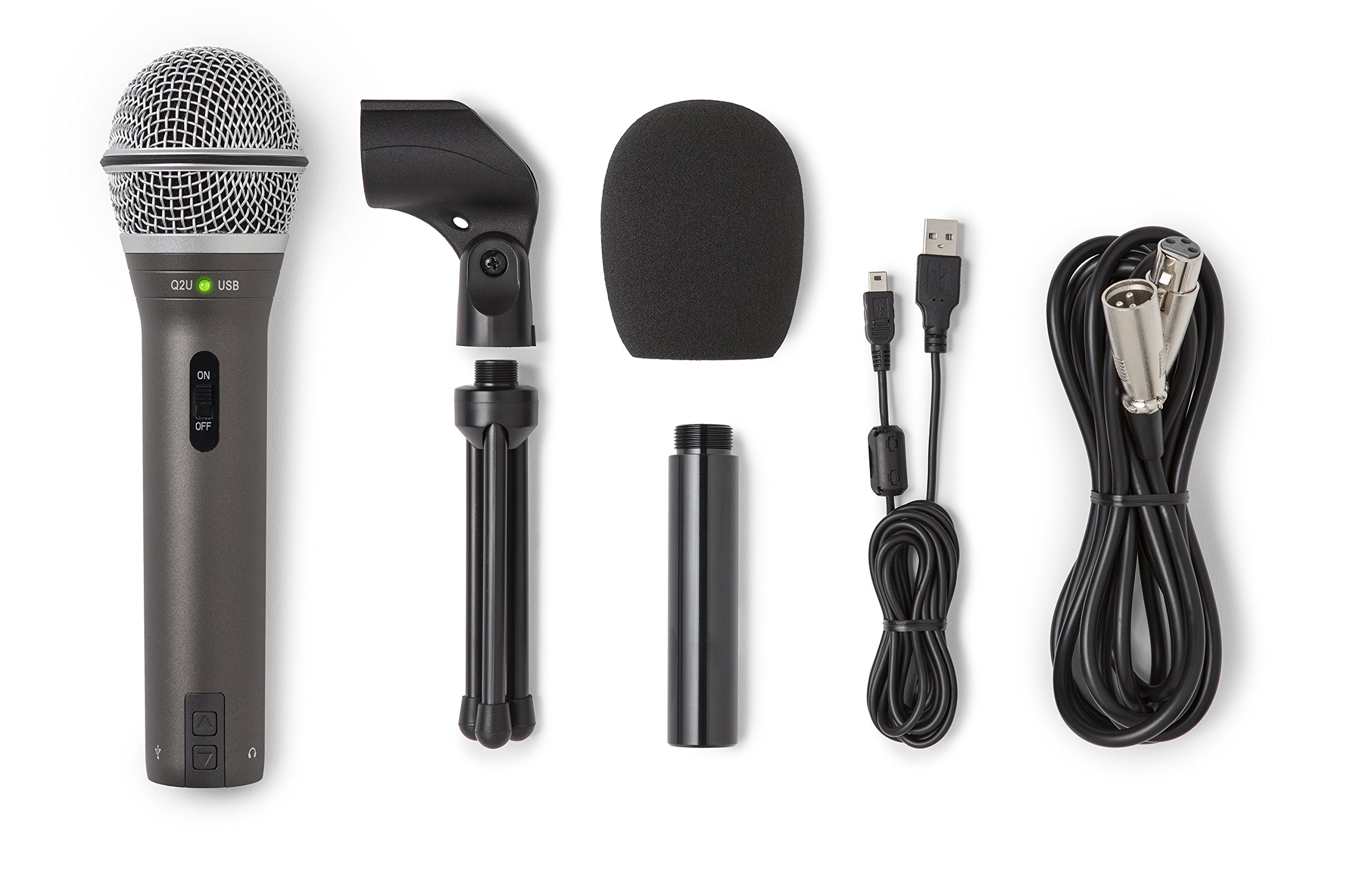
Consider the Q2U if you prefer a handheld form and want both connection cables and several setup accessories included.
The AM8 is a closer fit if its USB RGB and on-mic controls matter more to your desk-based streaming routine.
- The Q2U is a handheld dynamic USB-C/XLR microphone. Its described package includes a tripod desktop stand, extension, mic clip, windscreen, USB-C cable, and XLR cable.
- The AM8 pairs USB/XLR flexibility with USB-only RGB, tap-to-mute, gain adjustment, and headphone monitoring.
Multipurpose Dynamic Microphones alternative
600+ ratings
Read Amazon ReviewsSamson Q9U
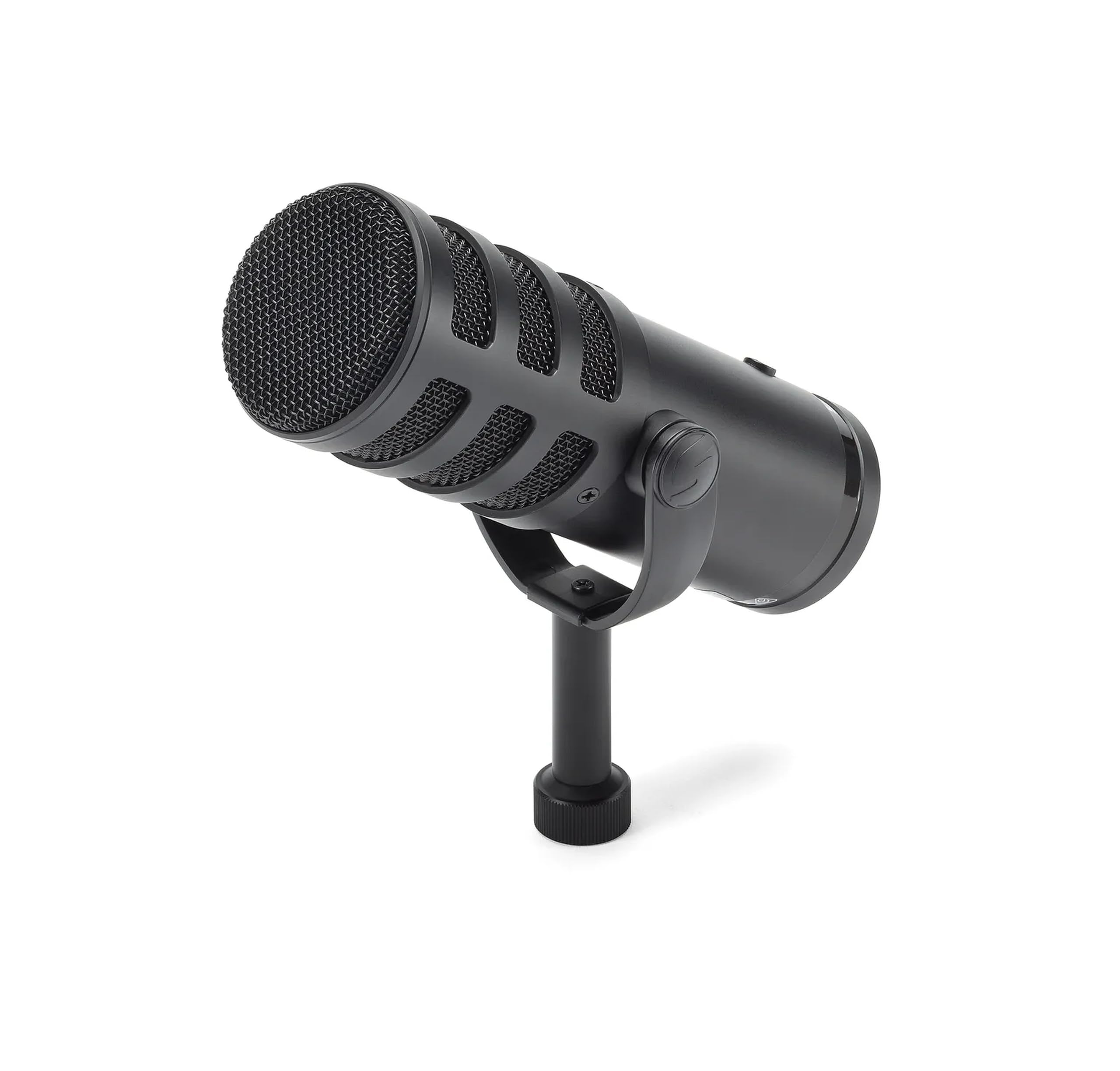
Choose the Q9U if simultaneous interest in USB-C recording specifications and a mute switch that works over either connection better matches your workflow.
The AM8 is the more relevant fit if USB RGB and a desktop-oriented gaming setup are priorities.
- The Q9U offers USB-C and XLR outputs, USB digital recording up to 24-bit/96 kHz, zero-latency headphone monitoring, and a mute switch that silences both outputs.
- Its description also specifies a cardioid pattern, internal shock mount, and dual-layer windscreen.
- The AM8 emphasizes USB controls and customizable RGB, while XLR use switches those functions off and requires a separate cable.
Is FIFINE AM8 Microphone Worth It?
The FIFINE AmpliGame AM8 is worth considering for a solo creator who wants USB convenience, accessible desk controls, and the option to move to XLR later.
Its cardioid dynamic design and close-position guidance suit a speaker who can keep the microphone nearby.
Choose it with a clear connection plan: USB enables the mute, monitoring, gain, and RGB functions; XLR requires a separate cable and interface or mixer, and those USB features are inactive.
If that division fits your routine, the AM8 offers useful flexibility for a gaming, streaming, or podcast desk.
Your review at a glance
12,000+ ratings
Read Amazon ReviewsFIFINE AmpliGame AM8
A flexible fit for beginner podcasters, streamers, and gamers who want USB convenience now and an XLR connection option for a later setup upgrade.
- Cardioid dynamic microphone with a 50 Hz–16 kHz frequency response; the suggested recording distance is 2 to 6 inches.
- USB connection for direct computer use, with tap-to-mute and an LED mute reminder.
- XLR connection for use with an audio interface or mixer; XLR cable is separate.
- USB-only headphone jack and monitoring-volume control, plus a microphone gain knob.