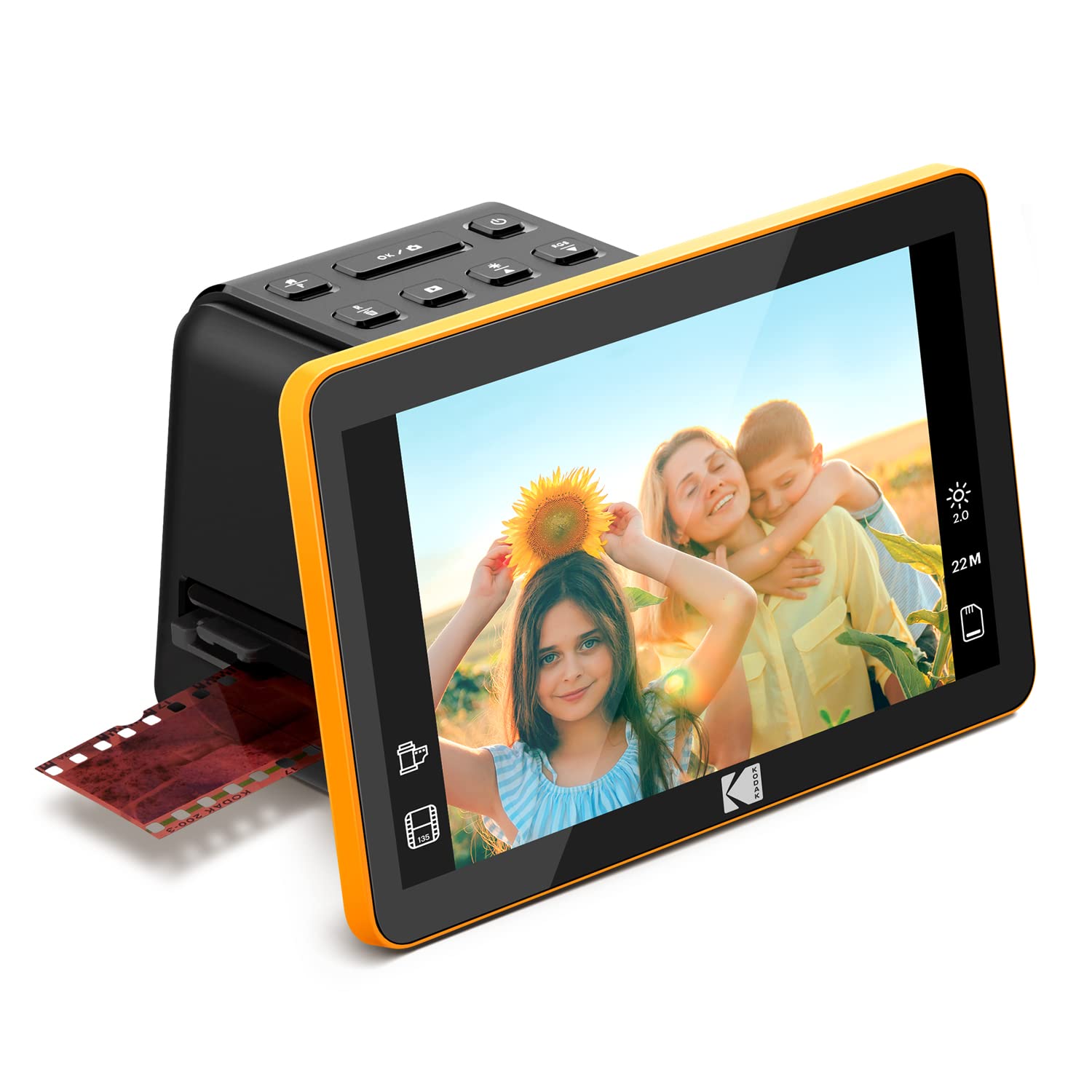
The KODAK Slide N Scan Max is designed to make home archiving of slides and negatives more approachable, with a feed-through tray, one-touch adjustments, and direct saving to an SD card.
This kodak slide n scan max review looks at what its supported formats and high-resolution output mean for buyers sorting a mixed collection.
Slide N Scan Max Review Summary
The quick verdict
1,000+ ratings
Read Amazon ReviewsKODAK Slide N Scan Max
A practical option for families and hobbyists digitizing 35mm, 110, and 126 slides or negatives without keeping a computer in the scanning workflow.
- Accepts 135, 110, and 126 film formats, including slides and color or black-and-white negatives.
- Uses a smooth-moving tray designed to feed film without constant repositioning.
- Saves directly to SD or SDHC cards up to 32GB, so a computer is not required for the basic saving workflow.
- Uses a 13MP CMOS sensor and 22MP interpolation, with image output up to 4208 × 3120.

Pros
- Supports several common film formats across slides and color or black-and-white negatives.
- Direct-to-card saving keeps the scanning process independent of a computer for basic archiving.
Consider before buying
- SD and SDHC saving is capped at 32GB, so buyers with large archives may need to transfer files to other storage as they work.
- The output resolution includes interpolation; buyers who need maximum detail for large prints should compare sample scans from the exact films they plan to digitize.
Read the full review summary
The Slide N Scan Max combines several useful conveniences in a compact desktop scanner: it handles 135, 110, and 126 film, supports color and black-and-white negatives as well as slides, and saves scans directly to an SD or SDHC card up to 32GB.
Its moving tray is intended to reduce the need to reposition film repeatedly, while simple capture controls support basic resizing, conversion, and image adjustments.
This design should appeal to people who want to preserve family photos at home without making a computer the center of every scan.
The 13MP CMOS sensor and interpolated output up to 4208 × 3120 provide ample pixel dimensions for sharing and general digital archiving, though the product details do not establish how much fine detail or tonal nuance it resolves from a particular original.
The buying factors
Slide N Scan Max Scorecard
Editorial scores reflect listed features and buyer fit; they are not laboratory measurements or customer ratings.
Format flexibility
Supports 135, 110, and 126 film, including slides and color or black-and-white negatives.
Standalone workflow
Direct SD/SDHC saving up to 32GB allows scanning without a computer in the workflow.
Loading convenience
A smooth-moving tray is designed to feed film with less repeated repositioning.
Image output options
A 13MP CMOS sensor with interpolation supports output up to 4208 × 3120, with basic editing controls.
Ease of adjustment
One-touch resizing, conversion, and image adjustments keep the stated editing workflow simple.
Compatibility clarity
USB connectivity is listed, while the minimum system requirement specifies Windows 7; buyers relying on computer use should confirm compatibility with their setup.
Key Features and Specifications of Slide N Scan Max
- Accepts 135, 110, and 126 film formats, including slides and color or black-and-white negatives.
- Uses a smooth-moving tray designed to feed film without constant repositioning.
- Saves directly to SD or SDHC cards up to 32GB, so a computer is not required for the basic saving workflow.
- Uses a 13MP CMOS sensor and 22MP interpolation, with image output up to 4208 × 3120.
- Provides one-touch controls for resizing, converting, and adjusting captured images.
- Compact unit measures 6.69 × 5.35 × 4.45 inches and weighs 16 ounces.
- Includes a one-year limited warranty; USB connection and Windows 7 minimum system requirement are listed.
Pros and Cons of Slide N Scan Max
Pros
- Supports several common film formats across slides and color or black-and-white negatives.
- Direct-to-card saving keeps the scanning process independent of a computer for basic archiving.
- The moving feed tray is intended to make handling a run of film less fiddly.
- Simple editing controls make basic resizing and image adjustment accessible without navigating complex menus.
Consider before buying
- SD and SDHC saving is capped at 32GB, so buyers with large archives may need to transfer files to other storage as they work.
- The output resolution includes interpolation; buyers who need maximum detail for large prints should compare sample scans from the exact films they plan to digitize.
- The listed minimum computer requirement is Windows 7, so confirm compatibility before choosing a computer-connected workflow.
Who Should Buy Slide N Scan Max?
Good fit
Consider the Slide N Scan Max if you have a family box of 135, 110, or 126 slides and negatives and want a straightforward way to create digital copies at home.
Its format support covers both color and black-and-white negatives, and the direct card workflow can suit occasional batches when you prefer to keep a computer out of the immediate process.
It is also a reasonable fit for buyers who value simple adjustments over a complicated editing setup.
The one-touch functions cover resizing, conversion, and image adjustment, while the tray aims to reduce repeated handling as you move through a collection.
Before buying, think about the scale and intended use of your archive.
A 32GB card limit makes file management part of a larger project, and the interpolated maximum should be evaluated against your expectations for crops, large prints, or close inspection.
Who should skip it
Look elsewhere if your film collection is outside 135, 110, and 126 formats, or if you need a workflow built around larger card capacities. Check computer compatibility in advance if USB-based operation is important to you.
For demanding restoration or print work, seek sample scans made from comparable originals before committing; the listed resolution alone does not establish how much grain, shadow detail, or color nuance will be retained.
How the Slide N Scan Max Fits a Home Archive
A flexible format range for family collections
Support for 135, 110, and 126 formats gives the scanner practical reach across several kinds of older consumer film.
It handles both slides and color or black-and-white negatives, which can simplify a mixed-box project by keeping those source types within one device's stated scope.
A workflow centered on the card
Direct saving to SD or SDHC cards up to 32GB reduces dependence on a connected computer while scanning.
That keeps the capture process simple, but a large collection will benefit from a plan for transferring and organizing files once the card fills.
Resolution figures and real use
The 13MP CMOS sensor and 22MP interpolation are paired with output up to 4208 × 3120.
These figures describe available digital dimensions, while results from particular originals can vary; buyers focused on enlargement or detailed restoration should judge examples from film similar to their own.
Simple controls and system fit
One-touch resizing, conversion, and image adjustment target basic home use rather than a long sequence of menu choices.
The scanner lists USB connectivity and Windows 7 as a minimum system requirement, so anyone planning a computer-linked setup should verify that their particular computer and workflow are supported.
Alternatives to Slide N Scan Max
Slide & Negative Scanners alternative
12,000+ ratings
Read Amazon ReviewsKODAK Slide N Scan Film & Slide Scanner
Choose the Max if its moving-feed design and stated output dimensions suit your priorities.
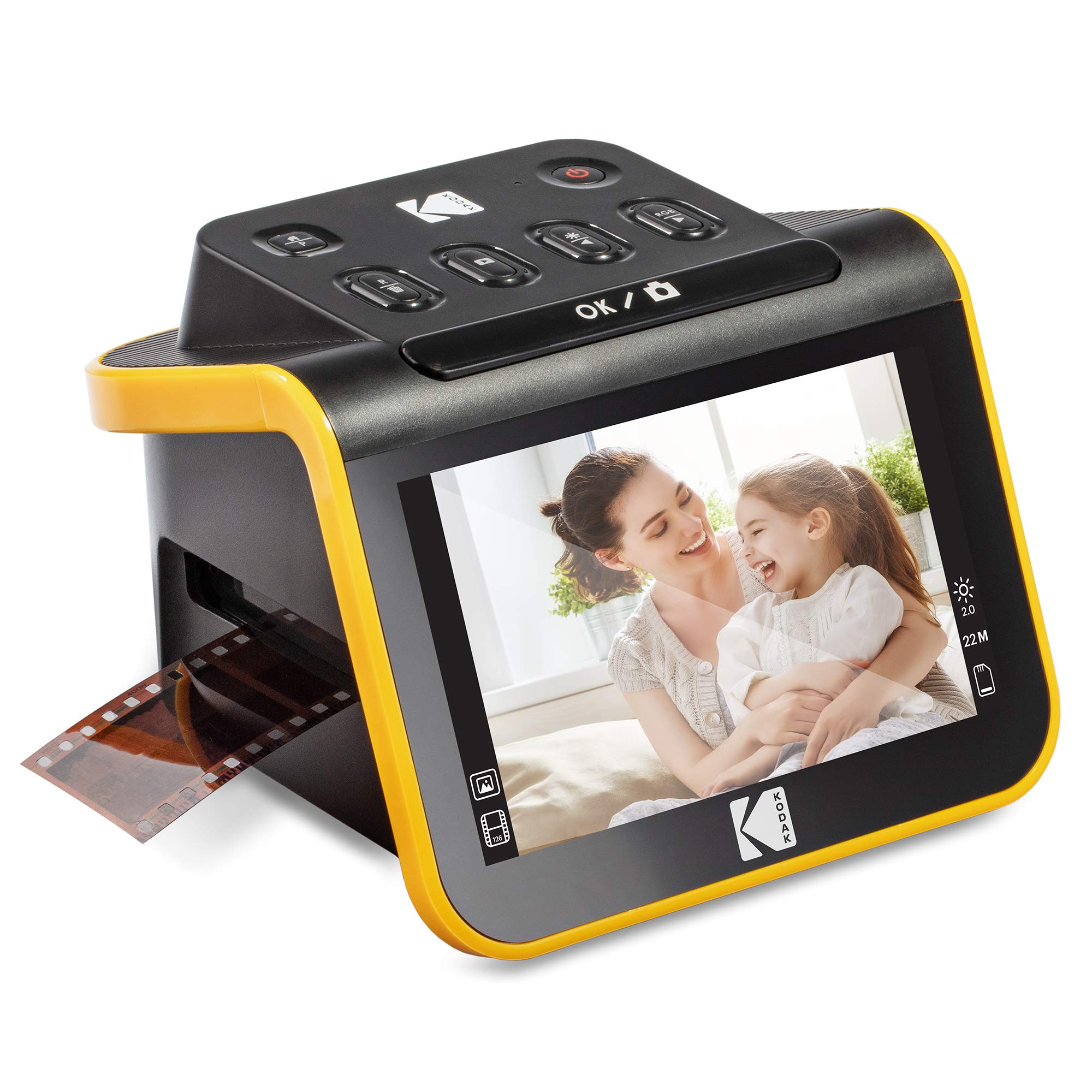
Consider the 5-inch LCD model if viewing and editing images on the scanner itself is more useful to you; both are described for a similar range of film formats and card capacity.
- This KODAK scanner includes a 5-inch LCD with gallery mode for previewing and editing, supports 135, 110, and 126 formats, and saves to SD or SDHC cards up to 32GB.
- Its description also lists a quick-feeding tray, Type-C USB computer connection, and included film inserts and accessories.
- The Slide N Scan Max supports 135, 110, and 126 film and saves directly to SD or SDHC cards up to 32GB, with output up to 4208 × 3120.
Slide & Negative Scanners alternative
11,000+ ratings
Read Amazon ReviewsKODAK SCANZA Digital Film & Slide Scanner
The Max is a fit for buyers whose archive centers on 135, 110, and 126 slides or negatives and who want direct card saving.
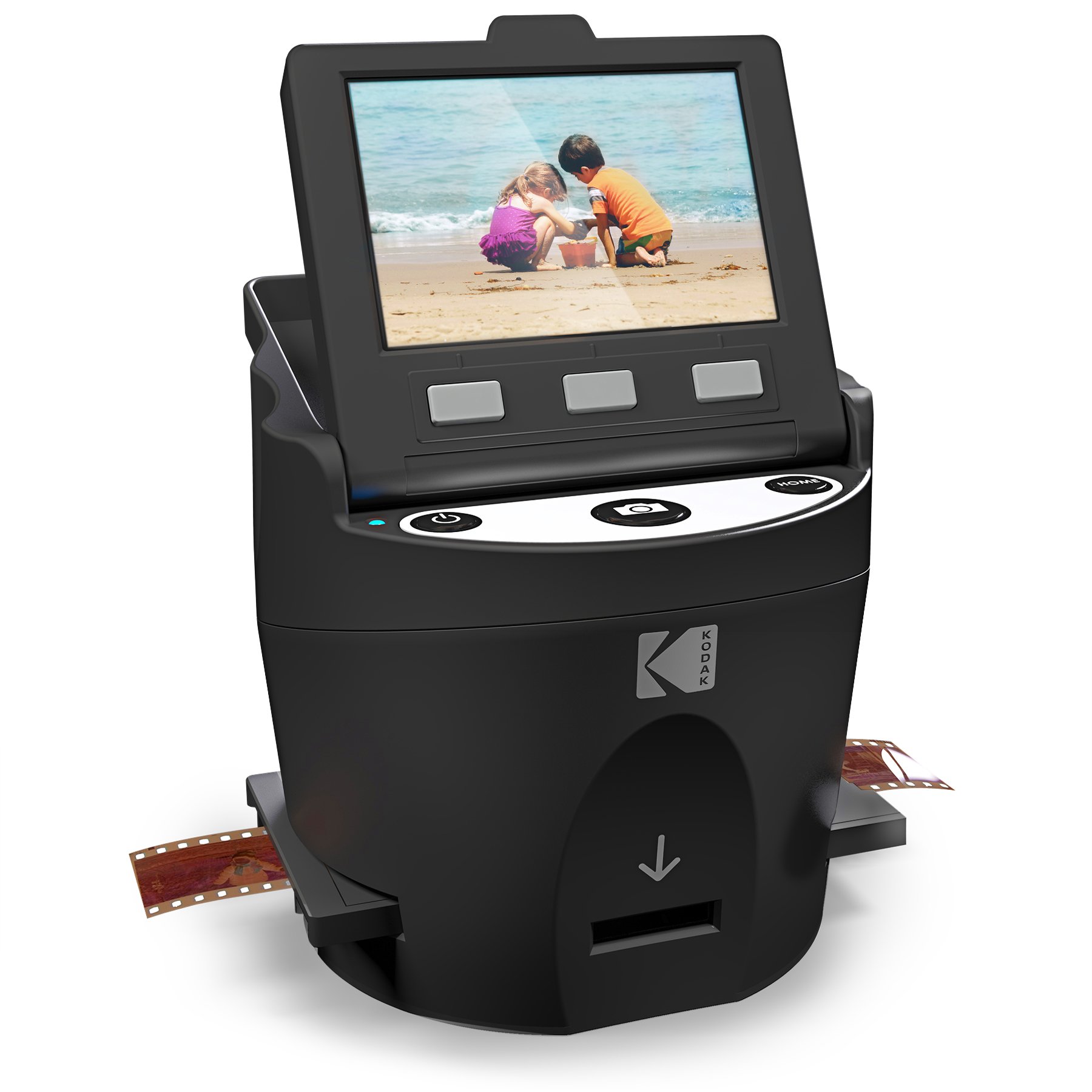
The SCANZA may suit a collection that also includes Super 8 or 8mm, or a buyer who prefers its larger stated card capacity and adjustable display.
- The SCANZA supports 35mm, 126, and 110 film as well as Super 8 and 8mm.
- It has a 3.5-inch adjustable-brightness, tilting LCD, includes multiple inserts and adapters, and supports SD cards up to 128GB.
- The Slide N Scan Max supports 135, 110, and 126 film, and its direct-card workflow is specified for cards up to 32GB.
Is Slide N Scan Max Worth It?
The KODAK Slide N Scan Max is worth considering for home digitizing when your collection uses 135, 110, or 126 film and you want a compact, card-based workflow with straightforward adjustments.
Its moving tray and support for slides and both color and black-and-white negatives make it a practical all-rounder for mixed family archives.
Keep the 32GB card ceiling, interpolated resolution, and stated computer requirement in mind when matching it to the size and quality demands of your project.
For routine preservation and sharing, its feature set is appealing; for large-format output or detailed restoration, compare sample scans before deciding.
Your review at a glance
1,000+ ratings
Read Amazon ReviewsKODAK Slide N Scan Max
A practical option for families and hobbyists digitizing 35mm, 110, and 126 slides or negatives without keeping a computer in the scanning workflow.
- Accepts 135, 110, and 126 film formats, including slides and color or black-and-white negatives.
- Uses a smooth-moving tray designed to feed film without constant repositioning.
- Saves directly to SD or SDHC cards up to 32GB, so a computer is not required for the basic saving workflow.
- Uses a 13MP CMOS sensor and 22MP interpolation, with image output up to 4208 × 3120.