The Samson S-Patch Plus review starts with a simple studio problem: reaching behind a rack to change signal connections slows down hands-on work.
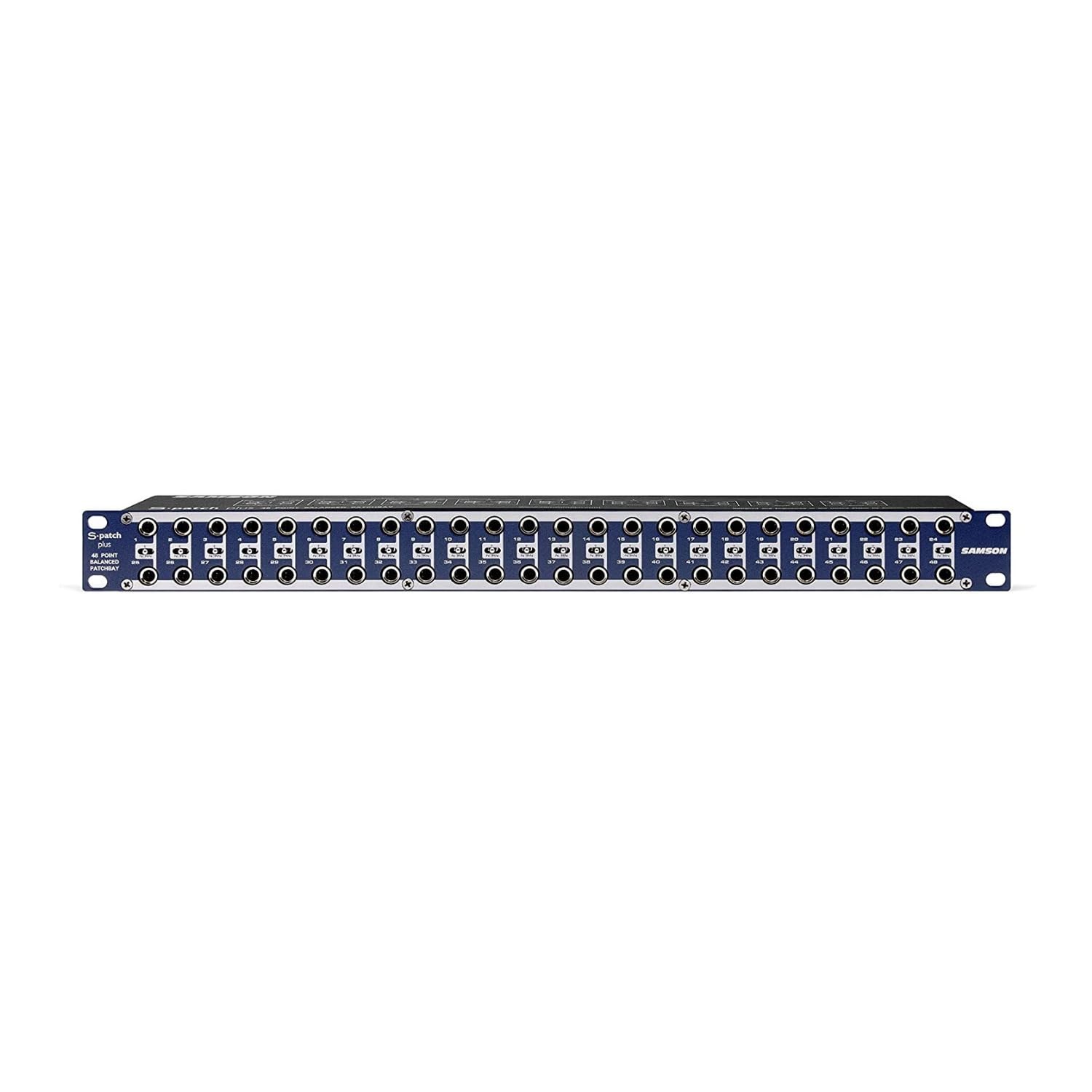
This single-space, 48-point patch bay brings those connections to the front and lets you set each point pair for normalled, half-normalled, or thru operation.
Samson S-Patch Review Summary
The quick verdict
500+ ratings
Read Amazon ReviewsSamson S-Patch Plus
A practical choice for recording setups that need centralized, configurable connections across mixers, rack gear, and effects chains.
- Provides 48 fully balanced patch points in a single rack-space unit.
- Uses 1/4-inch phone connections on the front and rear.
- Includes a miniature toggle for each channel pair to select normalled, half-normalled, or thru operation.
- Centralizes studio connections to make routing changes from the front panel.

Pros
- High connection capacity in a single rack space.
- Front-panel access makes it easier to change connections without reaching around a rack.
Consider before buying
- The 1/4-inch phone connections require compatible cables and equipment throughout the intended patch paths.
- Its configurable routing adds setup choices; buyers should plan which pairs need normalled, half-normalled, or thru behavior.
Read the full review summary
The S-Patch Plus combines 48 fully balanced patch points in a single rack space, with 1/4-inch connections on both the front and rear.
That layout gives a studio a central place to organize gear connections and make routing changes from the front panel, rather than repeatedly reaching around a mixer or equipment rack.
Its main appeal is configurable routing: miniature front-panel toggles set each patch point pair to normalled, half-normalled, or thru.
It suits recording setups with several pieces of equipment or effects chains to connect, especially when routing changes are part of the workflow.
Buyers should map their intended signal paths and confirm the available rack space and cable connections fit their system.
The buying factors
Samson S-Patch Scorecard
Editorial scores reflect listed features and buyer fit; they are not laboratory measurements or customer ratings.
Routing flexibility
Each patch point pair can be set to normalled, half-normalled, or thru using a front-panel toggle.
Connection capacity
The single-space unit provides 48 patch points, with matching 1/4-inch connections on the front and rear.
Rack efficiency
Its 48 points occupy one rack space, which can help consolidate connections in a rack-based studio.
Front-panel access
The patch points and mode switches are accessible from the front, supporting routing changes without reaching behind connected gear.
Signal-path design
The unit is described as fully balanced and designed to maintain a clean signal path.
Setup clarity
Multiple routing modes offer control, though buyers will benefit from planning and labeling their signal paths.
Key Features and Specifications of Samson S-Patch
- Provides 48 fully balanced patch points in a single rack-space unit.
- Uses 1/4-inch phone connections on the front and rear.
- Includes a miniature toggle for each channel pair to select normalled, half-normalled, or thru operation.
- Centralizes studio connections to make routing changes from the front panel.
- In thru mode, the rear top input passes to the front top output; the bottom-row path connects the front bottom input to the rear bottom output.
- Designed for uses such as managing recording signal flow and patching effects chains.
Pros and Cons of Samson S-Patch
Pros
- High connection capacity in a single rack space.
- Front-panel access makes it easier to change connections without reaching around a rack.
- Three selectable routing modes support different signal-flow arrangements.
- Fully balanced design is suited to studio connections where balanced patching is needed.
Consider before buying
- The 1/4-inch phone connections require compatible cables and equipment throughout the intended patch paths.
- Its configurable routing adds setup choices; buyers should plan which pairs need normalled, half-normalled, or thru behavior.
- A single rack space must be available where the front-panel connections will remain accessible.
Who Should Buy Samson S-Patch?
Good fit
Consider the S-Patch Plus if your recording setup has multiple rack or mixer connections and you regularly change how equipment or effects are routed.
Its 48 points provide room to bring many connections to one front-facing panel, while the three selectable modes let you tailor each pair to the signal-flow plan.
It is also a good fit when reducing the need to reach behind connected equipment is a priority.
Before buying, sketch the paths you expect to use and check that your equipment and cables use compatible 1/4-inch connections; that planning will help you make practical use of the different modes.
Who should skip it
Skip this model if your setup does not need a central patch point or you rarely change connections. A patch bay adds organization and access, but its value depends on having signal paths that benefit from front-panel patching.
Look elsewhere if your planned connections require a different connector format or you cannot spare a rack space with accessible front-panel clearance. Confirm the connection type and rack layout against your existing equipment before choosing.
How the Samson S-Patch Fits a Studio Routing Setup
Front access changes the workflow
The S-Patch Plus places its 1/4-inch patch connections and routing switches at the front of a single-space rack unit. That arrangement can make a multi-device setup easier to work with when connections change during recording or effects-chain adjustments.
It keeps the switching point visible and reachable, while the rear connections stay assigned to the equipment paths.
Three modes allow pair-by-pair planning
Normalled, half-normalled, and thru modes provide different ways to route each patch point pair. The value is control over how the top and bottom connections interact, rather than treating every pair as a fixed pass-through.
Decide which equipment should connect by default and which paths should be available for direct patching; then set each miniature toggle to match that plan.
Capacity comes with a labeling task
Forty-eight points can consolidate a substantial number of studio connections in one rack space.
More points also make a clear labeling scheme useful: mark the equipment and signal paths at both ends so front-panel changes remain easy to follow.
This is a practical setup consideration for a flexible patch bay, not a claim that the unit includes a particular labeling system.
Check the complete connection path
The product uses 1/4-inch phone connections at the front and rear and is described as fully balanced. Before integrating it, trace each intended path through the connected equipment and confirm that the connectors and signal requirements match.
For thru mode, the specified top and bottom paths are distinct, so account for their direction when planning a patch.
Alternatives to Samson S-Patch
No alternative model is recommended here. Compare the connection format, routing modes, and capacity that matter to your setup before choosing another option.
Is Samson S-Patch Worth It?
The Samson S-Patch Plus is worth considering for a rack-based recording setup that needs many front-accessible, configurable 1/4-inch patch points.
Its 48-point capacity, fully balanced design, and normalled, half-normalled, and thru modes make it a flexible way to centralize signal routing.
Buy it when those routing options solve a real workflow need and your equipment connections and rack layout are compatible. If you rarely repatch gear, the capacity and configuration choices may be more than your setup calls for.
Your review at a glance
500+ ratings
Read Amazon ReviewsSamson S-Patch Plus
A practical choice for recording setups that need centralized, configurable connections across mixers, rack gear, and effects chains.
- Provides 48 fully balanced patch points in a single rack-space unit.
- Uses 1/4-inch phone connections on the front and rear.
- Includes a miniature toggle for each channel pair to select normalled, half-normalled, or thru operation.
- Centralizes studio connections to make routing changes from the front panel.